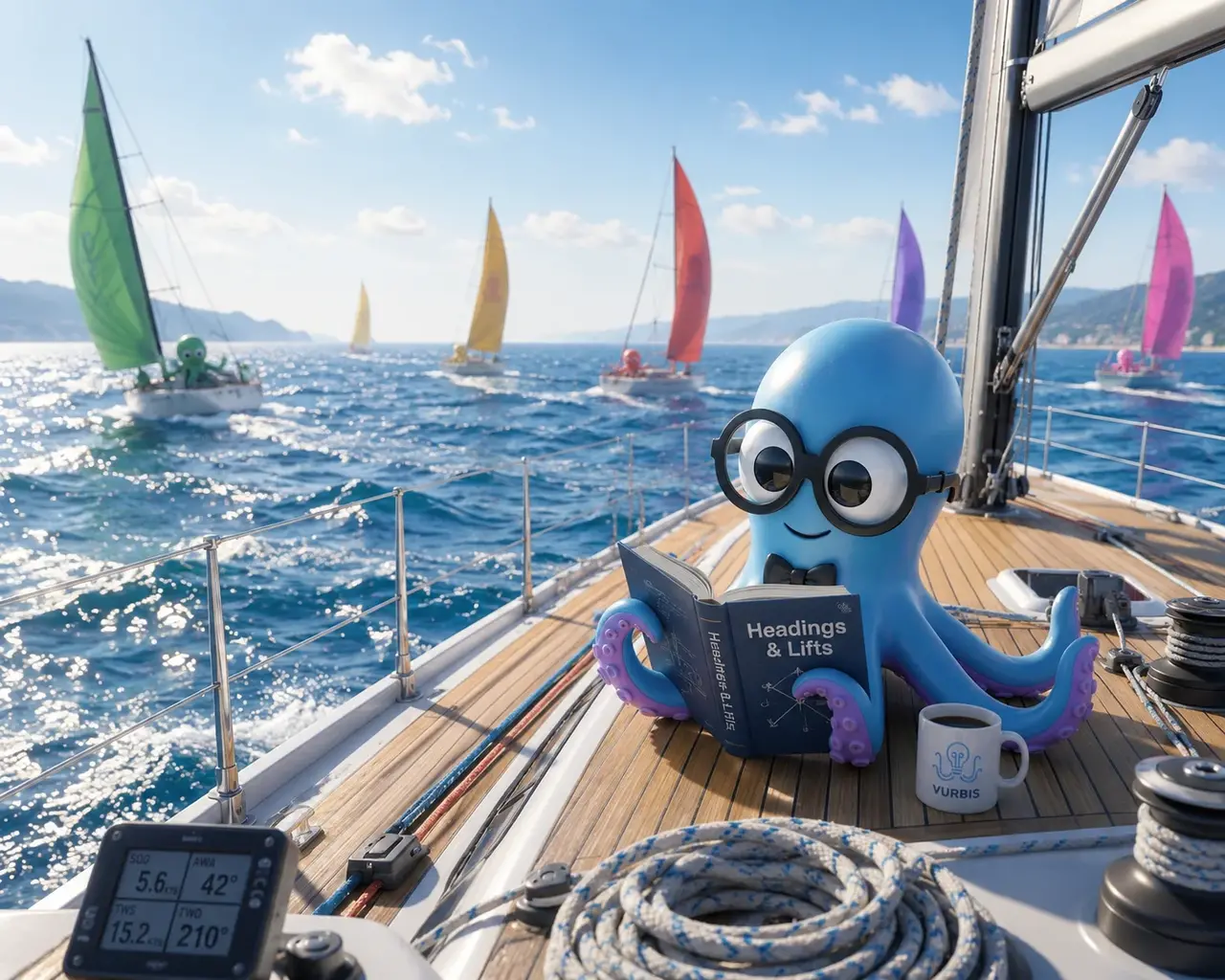
In everyday life, heading sounds like a good thing.
You're heading to the beach.
You're heading home.
You're heading somewhere exciting.
In sailing, however, a heading is often the most expensive word on a race course.
A heading happens when the wind shifts against you, forcing your boat to point further away from the mark. Nothing has really changed — the destination is still there, the boat is still fast, and the crew hasn't forgotten what they're doing. Yet suddenly you're sailing a longer route while the boats around you seem to be getting exactly the wind they wanted.
The difficult part is that nobody knows how long a heading will last. You can stare at the sails, study the water and question every decision you've made, but the wind will continue doing what the wind does.
Experienced sailors understand something important. A heading is usually followed by a lift. The same wind that is making life difficult now will eventually shift again and start helping you instead.
That's why the best sailors don't spend much time arguing with conditions. They adjust, stay patient and keep sailing until the opportunity returns.
It's a lesson that reaches far beyond sailing.
Not every difficult period means you've chosen the wrong direction. Not every setback means you've made a mistake.
Sometimes the wind has simply changed.
And sometimes the most important thing you can do is keep sailing until it changes back.
⛵ Fair winds and favourable shifts.